
AI Automation Trends (Calvetti Ferguson)
Technology
December 16, 2024
PrimeGlobal member firm Calvetti Ferguson is helping businesses leverage AI and automation to streamline processes and boost productivity in 2024. Through advanced solutions and strategic insights, the firm enables clients to unlock value, overcome challenges, and remain competitive.
Access our Technology Insights hub to access similar tools and resources to help your firm adapt to current challenges and opportunities that face the accounting profession.

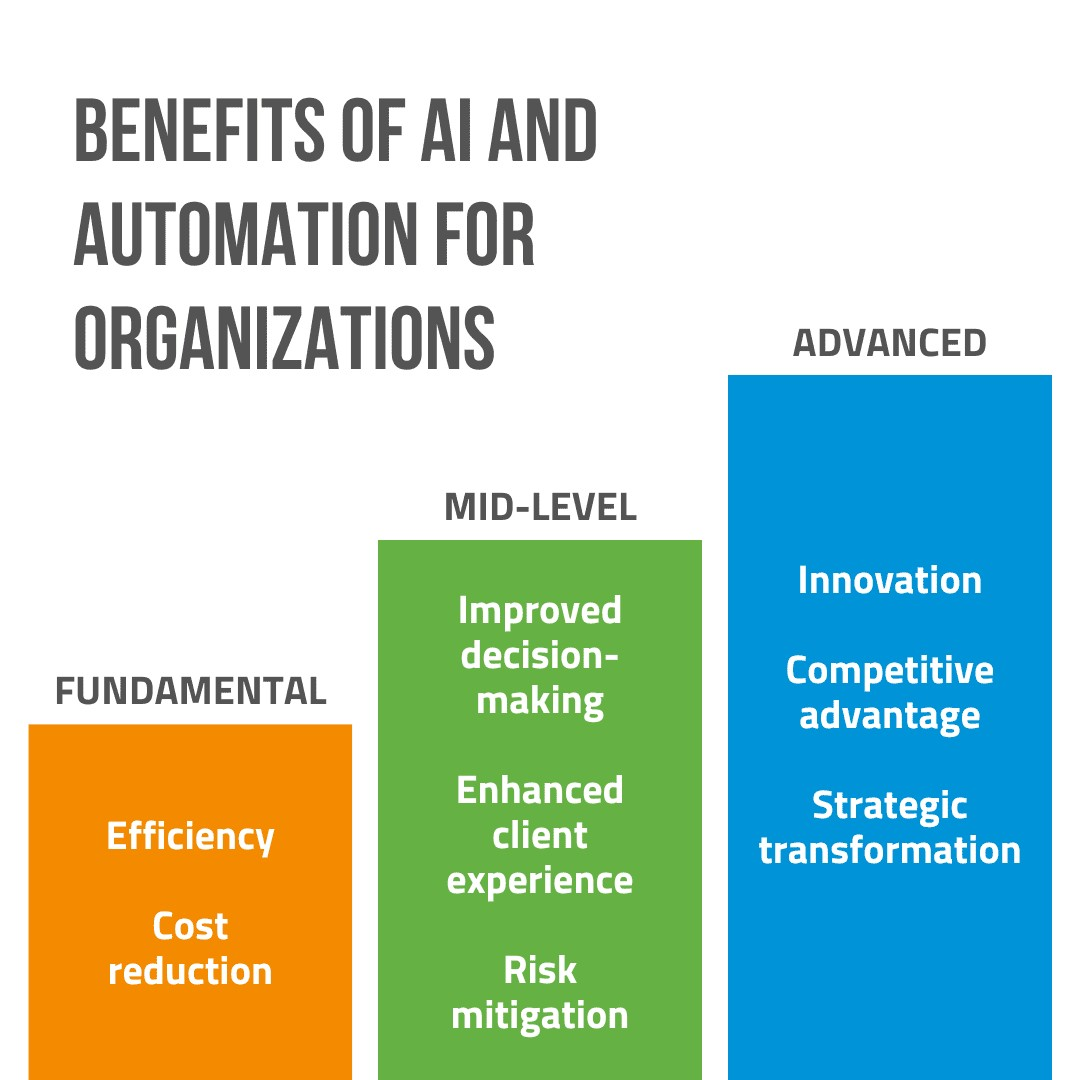
In 2024, AI and automation are fundamentally transforming how companies operate, enabling them to streamline complex processes and deliver measurable outcomes. According to a recent survey, 64% of business owners believe AI will help improve customer relationships and improve productivity. This shift is increasing efficiency and driving strategic breakthroughs, allowing companies to optimize their processes, reduce costs, and respond faster to market demands. As AI continues to evolve, companies are leveraging its predictive capabilities to reshape their operations and position themselves for sustained growth in a highly competitive landscape.
Leadership Capitalizing on AI’s Value
Through AutomationCompanies are no longer only exploring AI’s potential—they are actively using automation to turn AI’s promise into tangible results. Executives are focusing on AI to drive growth, streamline processes, increase productivity, and improve client satisfaction. Through intelligent automation services, AI is being utilized as both an innovation tool and a competitive advantage that companies are using to stay ahead. The focus has shifted to real ROI, and it’s clear that AI is delivering.
Expanding Use Cases
The range of applications for AI and intelligent automation is expanding rapidly across various industries. Companies are increasingly shifting their focus from the technology itself to the outcomes it delivers. There’s a growing demand for AI solutions that provide tangible proof of value, such as improved efficiency, cost savings, and enhanced client experiences. Organizations that want to capture AI value quickly turn to packaged solutions like intelligent document processing (IDP) and communications mining to deliver near-in results. Executives are actively pursuing AI use cases that bring quick, measurable value.
Advanced Automation and Process Intelligence
Automation is evolving with AI, enabling companies to eliminate manual tasks across operations, from robot maintenance to automation model training. A recent survey shows that 51% of organizations are adopting AI for process automation.
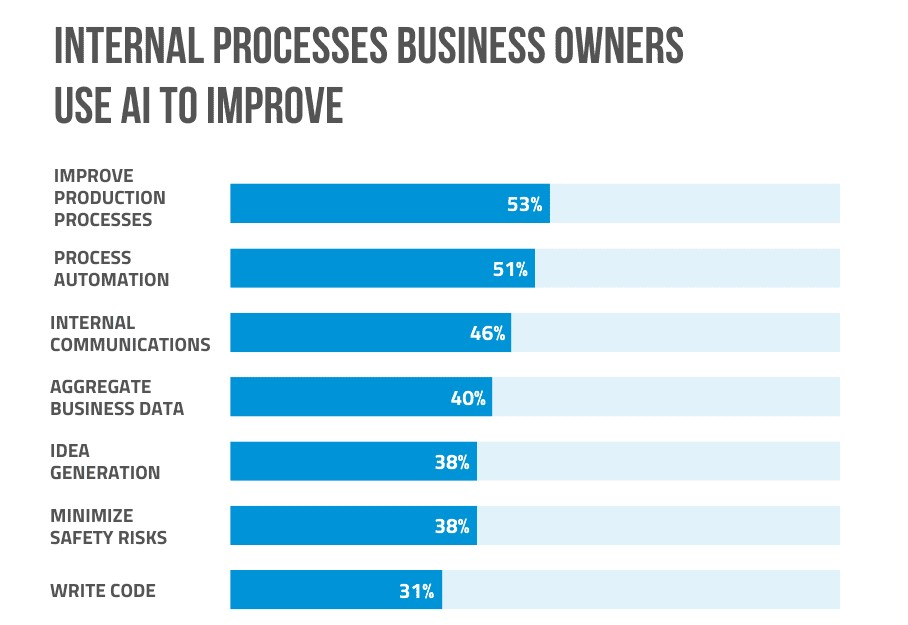
By incorporating process intelligence into their automation strategies, companies can identify inefficiencies and optimize workflows in unprecedented ways. The result is greater agility, productivity, and scalability. Companies adopting advanced automation practices stay competitive in the fast-moving digital landscape.
Mitigating AI Risks
Managing associated risks is essential as AI becomes more central to business operations. Leaders are addressing AI’s risks by establishing ethical frameworks and governance models to ensure responsible use. AI providers are stepping up with innovative safeguards, and companies are prioritizing transparency and trust in their AI systems. Successful AI implementation today requires technical expertise and a strong risk management approach to mitigate potential vulnerabilities.
Redefining Work
The rise of AI is changing the workplace as traditional job roles evolve and human-AI collaboration increases. Companies are rethinking job descriptions, investing in employee upskilling, and designing work environments that maximize the strengths of both humans and AI. Automation is freeing employees from repetitive tasks, allowing them to focus on higher-value activities. This shift is driving a future of work where human and machine capabilities are seamlessly integrated.