
Decarbonization: Japan's Endeavors and Readiness (Yamada & Partners)
Sustainability
October 30, 2023 - Yamada & Partners Tax Co.This is a thought leadership from member firm Yamada & Partners on the transition towards a decarbonized society and how Japan is progressing with a number of initaitives including a commitment to renewable energy, promoting R&D and a new carbon pricing system.
To access more sustainability resources, visit our dedicated Sustainability hub, including thought leadership, videos on demand, and partner resources.
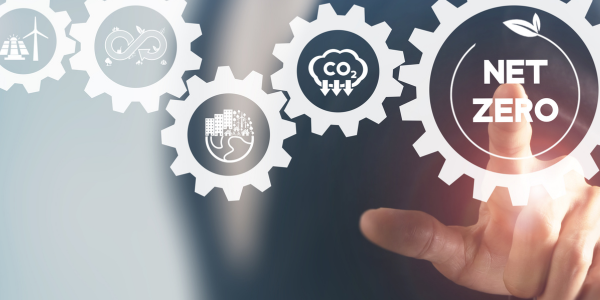
Decarbonization: Japan's Endeavors and Readiness in Shaping Industrial Transformation
The global shift toward carbon neutrality signifies an investment in shaping a brighter future for upcoming generations. Simultaneously, it offers substantial economic prospects for a society recovering from the impacts of the COVID-19 pandemic. This transition towards a decarbonized society is poised to instigate profound socioeconomic shifts, akin to the transformations brought about by the Industrial Revolution.
As Japan embarks on the inaugural year of its fourth industrial revolution, the nation remains steadfast in its commitment to advancing decarbonization efforts. In this article, we will highlight the trajectory toward carbon neutrality and provide an overview of Japan's strategic initiatives in this endeavor.
1. Moves toward decarbonization
Discussions on carbon decarbonization have begun in earnest in Japan.
To reduce emissions of greenhouse gases to zero by 2050 (the Government of Japan's official announcement to reduce emissions by approximately 45% from 2013 to 2030), it will be necessary to expand renewable energy, introduce emissions trading schemes, and invest in technology. In particular, a substantial increase in renewable energy such as solar and offshore wind is anticipated. The country plans to increase offshore wind power capacity to 45 million kilowatts by 2040, the equivalent of 45 nuclear power plants. According to the International Energy Agency (IEA), energy-related investment required for decarbonization amounted to US$67.8 trillion (about 7640 trillion yen) worldwide by 2040.
Achieving "carbon-neutral" emissions of greenhouse gases of virtually zero in 2050 requires a huge amount of funds. Many resources have suddenly been directed to environmental investments, which is creating a variety of problems and bottlenecks in the market (prices of some raw materials and others are soaring).
The key to this trend toward carbon decarbonization is identified as the following three perspectives.
- Renewable energy such as solar and offshore wind, storage technology, and hydrogen become the mainstream, and traditional coal-fired and nuclear power generation shrinks and maintains its current status.
Technologies such as solar panels and wind power generators are highly competitive in China and Europe, and Japanese companies are increasingly investing in foreign companies that are competitive with Japanese demand.
- Dissemination of the carbon pricing system.
Carbon pricing is expanding worldwide. In Germany, a new carbon tax has been created, and part of its financial resources are used to reduce social insurance premiums. Companies can make decisions daily by incorporating price factors, making it easier for entrepreneurs and investors to develop long-term prospects.
- Border coordination measures (measures to add prices to imports from countries with insufficient measures to combat global warming) are also called border carbon taxes.
By 2023, the European Union will introduce a
"border carbon coordination" that imposes duties on imports from
countries with lax regulations based on the volume of carbon dioxide (COsqm)
produced during production. A new framework for taxation could emerge
internationally.
2. Initiatives in Japan
First, an overview of the review of Japan's power supply mix includes the following situations.
- Nuclear power generation has been stagnant since the Great East Japan Earthquake in 2011.
- China's sales of solar panels and storage batteries grow.
- Wind power generation is also strong in Europe.
- Geothermal power generation technology is high, but the cost is high.
- The hydrogen and ammonia markets, which are competitive in Japan (apart from the cost issue), are not currently emphasized in the international rules for decarbonization.
Under such circumstances, the following goals and plans were presented.
- The revised Law Concerning the Promotion of Measures to Cope with Global Warming was enacted.
Municipalities are designating "promotion areas" to streamline renewable energy introduction, easing procedures for businesses. The challenge lies in securing sufficient space for increased wind and solar power generation. Additionally, the expansion of power transmission networks, with METI's plan to double capacity, faces funding concerns of potentially trillions of YEN in operating expenses. Furthermore, there are calls for advancements in storage batteries, next-gen reactors, nuclear fusion, and technologies like hydrogen and ammonia in the long term.
- Policies for decarbonization
The government has allocated JPY2 trillion for capital investment subsidies, supporting R&D. The Basic Policies for Economic and Fiscal Management and Reform 2021 emphasize growth through carbon decarbonization. They focus on making renewable energy the primary power source and achieving carbon neutrality with public sector leadership. As per the Green Growth Strategy, priority is given to offshore wind, hydrogen, and storage batteries.
- Promote R&D and capital investment in the field.
The government aims to have solar panels installed in half of all national and local government-owned buildings and land by 2030, with a further goal of achieving 100% installation by 2040, as part of their initiative to reduce greenhouse gas emissions by 46% compared to 2013 levels by fiscal 2030.
- Mitigation of diversion of wasted agricultural land
The Ministry of Agriculture, Forestry and Fisheries will ease the requirements for the diversion of degraded agricultural land to encourage the use of renewable energy. This mitigation will reduce the requirement for renewable farmland to be diverted to renewable energy applications, such as solar PV.
The shortage of land and constraints on transmission line connections are challenges for solar power generation, and there are concerns that the introduction will be sluggish in the future. Currently, solar panels are installed at 20% in advanced municipalities, averaging 10%, and government buildings at around 2%.
For more detailed information and initiatives,
please contact Yoshiaki Tokuyama, senior manager, International business division, Yamada & Partners.
Content by:
Yamada & Partners Tax Co.
Yamada & Partners is a strong team of friendly specialists delivering high-value-added services across Japan. The firm provides various accounting and tax services, including services for individual and corporate clients, and has 20 offices in Japan. Their private wealth work includes assisting with business succession plans, as well as with inheritance plans and related tax returns. They are known for delivering services that surpass client expectations and are able to provide advice and services in many specialized fields, including consulting for medical facilities, setting up public interest corporations, international business and consulting on organizational restructuring.
Learn more