From experimentation to momentum: How firms level up on AI
Technology
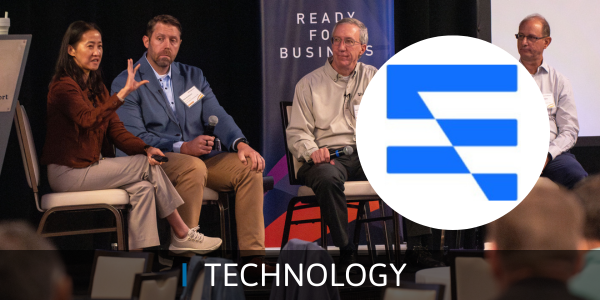
July 8, 2026This article draws on a keynote delivered by Ellen Choi, CEO and founder of Edgefield Group, at PrimeGlobal's 2026 Partner Leadership Summit in Huntington Beach, California.
It explores how accounting firms can move past AI experimentation and build the people, processes and systems that turn ambition into measurable progress.
Today, the majority of firms have someone experimenting with a tool, an internal use case, a chatbot in the corner of a workflow. And after months of pilots and platform trials, many are asking:
Why does so little of the promised progress feel tangible at the firm level?
That is the defining question of 2026, and the answer separates the firms building capability from the firms accumulating tools.
From experimentation to momentum
The question firm leaders are increasingly asking has moved from "are we using AI" to "how are we using AI", because there is an ocean of difference between the two.
An accountant using AI to summarize documents and draft emails improves productivity. But there is another level of productivity entirely, where an accountant uses Excel's Copilot and agentic AI capabilities to compress a cash flow forecast that took two days into two hours.
Today, AI is no longer a productivity feature adopted by individuals but a capability built into the firm. And firms can no longer throw money at AI to check the box, treat it as a side project, or stay in paralysis. Experimentation was 2025. Momentum is 2026. Using AI is no longer the bar.
Intentional and coordinated firm-wide effort is necessary
Leveling up on AI has less to do with buying more software than most firms assume. It has more to do with firm-wide coordination and intentional, holistic effort across the entire firm.
Edgefield Group's AI-Native Firm framework moves a firm through three phases of maturity (Foundations, Integration, Transformation), across four pillars (People, Process, Technology, Growth).
Below is what a firm looks like at each phase, pillar by pillar.
People
(a) Foundations: this is about getting to a baseline shared AI literacy across the firm. Staff know what AI is because the firm has run formal, structured training, beyond a one-time lunch and learn. Leadership is also having open, two-way conversations about how AI reshapes roles, so anxiety gets addressed rather than left to metastasize.
(b) Integration: staff move from AI literate to AI fluent. Fluency does not mean knowing everything (impossible), but being confident in using AI and knowing what to ask to teach themselves. A majority of staff use a base AI tool daily in real work.
(c) Transformation: AI competency is embedded in job descriptions, performance reviews, and hiring. Judgment and relationship become the high-value work, because the AI-native workforce handles everything downstream.
Process
(a) Foundations: the staff is discovering use cases, and understanding how to increase individual productivity by using AI. The firm has an AI policy updated in the last six months and covering agentic AI, and shared use cases are documented so teams work from a common playbook.
(b) Integration: at least one end-to-end workflow has been redesigned around AI: client onboarding, 1040 prep, audit fieldwork, or the monthly close. Teams are also building shared AI assets like Copilot agents, custom GPTs, and skills.
(c) Transformation: at least one role has a different job description than it did a year ago because AI owns work a person used to do.
Technology
(a) Foundations: the firm has approved at least one general-purpose AI tool and audited its software stack for AI capabilities already sitting inside practice management, tax, and audit systems. Most firms are paying for AI they are not using.
(b) Integration: cloud migration and data accessibility gaps are being actively closed, because on-prem silos cap AI regardless of the tools bought on top. AI-native vendors are being piloted in at least one service line.
(c) Transformation: the majority of the firm's workflows touch agentic AI: systems that reason through problems, decompose them, and recover from failures on their own.
Growth
(a) Foundations: leadership has started the internal conversation about AI's impact on pricing and business model, efficiency gains are being tracked, and AI is part of at least one client conversation.
(b) Integration: pricing has changed in at least one service line, moving off pure hourly, and staff are being trained on advisory skills in anticipation of the capacity AI is about to unlock.
(c) Transformation: pricing transformation covers the majority of the book, AI advisory is a meaningful revenue stream, and the service mix has materially shifted toward advisory.
The bottom line
Overnight success at AI is years of preparation. Firms winning in 2026 spent prior years doing the sequenced work across all four pillars.
If you are in an earlier part of your AI journey, you are in good company. What matters now is what you do today. The firms that pull away from the pack over the next two years are the ones moving methodically and fast, starting the sequenced work now.
The best time to start on AI was yesterday. The next best time is now.