
Unearthing the Overlooked Withholding Tax in Taiwan (Chungsun Prime CPA)
Business Opportunities
November 8, 2023This is a thought leadership article from PrimeGlobal member firm Chungsun Prime CPA on the intricacies of Taiwan's often overlooked withholding tax and the obligations of foreign entities to avoid penalties and legal consequences.
Want to share your own latest news and insights? Why not Submit an article or contact communications@primeglobal.net to find out more.

When it comes to taxes, few can argue that Taiwan is a land of surprises. While many are familiar with the country's income tax, value-added tax (VAT), and other common levies, there is one often overlooked aspect of taxation in Taiwan that deserves more attention – the withholding tax. In this article, Chungsun Prime CPA explores what withholding tax is, why it is essential, and how it can sometimes go unnoticed amidst the broader tax landscape of Taiwan.
Understanding Withholding Tax
Withholding tax systems are designed to collect taxes at the source of income, primarily from individuals or entities making payments to others, and usually involve Taiwanese companies withholding income tax from their foreign counterparties and paying this to the tax authority directly. In Taiwan, withholding tax applies to various types of income, including interest, dividends, royalties, and certain service fees. It is essential to grasp that withholding tax is not an additional tax but rather a method for collecting the eventual income tax liability of the recipient.
The Key Components
To comprehend the intricacies of withholding tax in Taiwan, let's break it down into its key components:
- Types of Income: Withholding tax in Taiwan primarily focuses on interest, dividends, royalties, and specific service fees. Each category may have its applicable withholding tax rate.
- Tax Rates: The withholding tax rates vary depending on the type of income and the recipient's status. For instance, the withholding tax rate for interest paid to foreign entities is 20%, while the rate for dividends distributed to foreign shareholders can range from 0% to 21%, depending on treaties and specific conditions.
- Exemptions and Reductions: Taiwan has entered into double taxation agreements (DTAs) with numerous countries to avoid double taxation. These DTAs can often provide exemptions or reduced rates for withholding tax on certain income types.
- Reporting and Compliance: Entities making payments subject to withholding tax are required to withhold the tax amount, report it to tax authorities, and remit the withheld tax within a specified period. The obligation is on the company to withhold the correct amount of tax and failure to do so can lead to penalties and legal consequences.
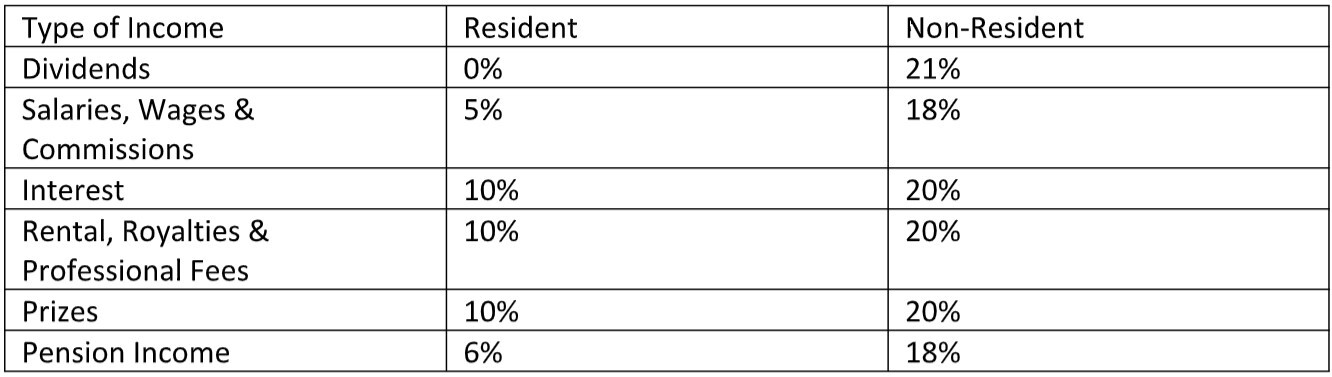
A withholding tax is an income tax paid to the government by the payer of the income rather than by the recipient. The tax is thus withheld or deducted from the income paid to the recipient. The withholding tax rate on income derived from the source for resident and non-resident recipients is summarized below:
Commonly Overlooked Aspects
Now that we have a basic understanding of withholding tax in Taiwan, let's delve into why it often goes unnoticed:
- Global Business Hub: Taiwan has emerged as a global business hub, with foreign companies establishing their presence in the country. These entities might not be familiar with Taiwan's intricate tax regulations, making them susceptible to inadvertently overlooking withholding tax obligations.
- Complexity: The complexity of Taiwan's tax system, combined with various tax treaties, can be overwhelming for businesses, especially smaller ones. Understanding the nuances of withholding tax rates and exemptions can be a daunting task.
- Focus on Other Taxes: While businesses may be diligent in complying with income tax and VAT regulations, withholding tax can often take a backseat, as it is not as visible as other taxes in day-to-day operations.
- Multinational Operations: For multinational corporations operating in Taiwan, coordinating withholding tax compliance across various jurisdictions can be challenging. Ensuring compliance with withholding tax obligations in multiple countries can divert attention away from Taiwan's specific requirements.
Conclusion
In conclusion, withholding tax in Taiwan is a crucial component of the tax landscape that often remains hidden in the shadows of more prominent tax categories. Businesses operating in Taiwan, especially foreign entities, need to be aware of their withholding tax obligations to avoid penalties and legal consequences. To navigate the complexities of withholding tax, seeking professional tax advice and staying informed about changes in tax regulations is essential. As Taiwan continues to thrive as a global business destination, understanding and complying with its withholding tax rules will be increasingly important for businesses looking to thrive in this vibrant market.