Understanding Scope 3 Emissions (Henderson Loggie)
Sustainability
February 6, 2025 - Henderson Loggie
In this article, Henderson Loggie highlights why the sustainability journey matters. For many organisations, tackling Scope 3 emissions can be both a challenge and an opportunity but one that nonetheless must be grasped by business leaders.
In today’s increasingly sustainability-driven economy, businesses face mounting pressure to address their environmental impact.
While the systems and processes required to calculate these emissions
are often unavailable initially, understanding and reducing these
emissions aligns with global climate targets, such as the Paris
Agreement, enhances competitiveness, builds trust with stakeholders, and
uncovers operational efficiencies.
What Are Scope 3 Emissions?
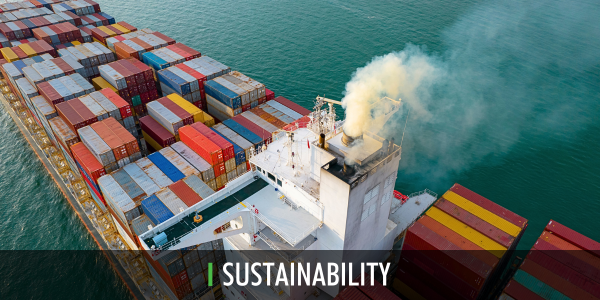
Scope 3 emissions are the indirect emissions that occur both upstream and downstream in an organisation’s value chain. These include emissions from suppliers, business travel, employee commuting, waste disposal, even the use of products, services and more. For many businesses, Scope 3 can account for 60-90% of their total emissions, dwarfing the more familiar Scope 1 (direct emissions) and Scope 2 (purchased energy) categories. Addressing Scope 3 emissions is therefore essential for organisations aiming to reduce their environmental impact and meet evolving market expectations.
What are the Biggest Challenges with Scope 3?
Quantifying Scope 3 emissions, while essential, is a complex process that demands strategic planning, coordinated stakeholder engagement, and robust data management. The principal challenges include:
Data Gaps: Securing consistent and granular data e.g. from supply chain partners and downstream stakeholders is often fraught with difficulties, as data availability and quality can vary significantly across the value chain.
Complexity: The wide range of Scope 3 categories requires customised approaches that align with an organisation's operations and industry specifics.
Resource Constraints: Many organisations face significant limitations in terms of technical expertise, financial capacity, and workforce availability, which can impede comprehensive emissions accounting and strategic planning efforts.
Accuracy and Credibility Issues: The reliance on estimated data, industry benchmarks, and proxies introduces inherent uncertainties, potentially affecting the reliability of emissions inventories and the efficacy of mitigation strategies.
Henderson Loggie’s Mission
Henderson Loggie, a leading accountancy and business advisory firm and a member of PrimeGlobal, provides a practical example of how SMEs can begin their journey to address Scope 3 emissions.
Partnering with Boxfish, they began their sustainability journey by establishing a Carbon Baseline to measure emissions across Scopes 1 and 2. This initial step gave them a clear understanding of their direct emissions and laid the foundation for expanding into Scope 3.
As part of their ongoing service provision, Boxfish worked closely with Henderson Loggie to launch their Scope 3 emissions calculations. Key first steps included identifying key emission categories, establishing a robust system for data collection and management, and ensuring ongoing accuracy and adaptability as their understanding of emissions evolves. Building on the initially quantified emissions, Boxfish has also developed a tailored Net Zero Roadmap to guide Henderson Loggie's long-term sustainability strategy.
Jacqueline Watson from Scottish firm Henderson Loggie, a PrimeGlobal member firm, said: “Partnering with Boxfish has given us clarity and confidence in our sustainability efforts. They’ve not only helped us understand our emissions profile but also supported us in taking actionable steps to address our impact.”
This collaboration demonstrates the importance of having access to strategic guidance and practical resources, enabling organisations to make measurable progress toward their sustainability goals.
Best Practice
Organisations looking to address Scope 3 emissions effectively can benefit from a structured and incremental approach. Key recommendations include:
- Start with a Materiality Assessment: Identify and prioritise the most significant Scope 3 categories based on their contribution to overall emissions and relevance to the organisation.
- Set Clear Goals: Establish specific and measurable targets for Scope 3 emissions reduction to guide efforts and track progress. Include interim milestones to monitor short-term progress and maintain momentum towards achieving long-term reduction goals.
- Integrate Emissions Tracking into Procurement: Request suppliers to report emissions data and include sustainability criteria in supplier selection processes.
- Use Industry Benchmarks: Compare your Scope 3 emissions against industry averages or best practices to identify areas for improvement.
- Encourage Behavioural Changes: Promote low-carbon options within the organisation, such as reducing business travel or incentivising sustainable employee commuting.
- Report and Communicate Progress: Transparently disclose Scope 3 emissions and mitigation efforts in sustainability reports to build credibility with stakeholders.
- Develop Partnerships: Collaborate within industry groups or initiatives to share knowledge and resources for tackling shared challenges.
Initiating efforts to address Scope 3 emissions is an important first step in the sustainability journey. Collaborating with trusted and experienced partners can help to ensure that the process is guided effectively, allowing for gradual and practical progress.
By prioritising key categories, engaging stakeholders, and leveraging the right expertise, organisations can take significant steps toward reducing their environmental impact.
With increasing pressure from the market and regulators, businesses that act now not only contribute to a more sustainable future but also gain a competitive edge in an evolving business landscape.
Content by:
Henderson Loggie
Henderson Loggie delivers expertise in all essential services, be it audit and accountancy, business advice, tax, payroll, insolvency, corporate finance and financial services, alongside more specialist services such as forensic accounting, HR, Marketing and VAT. Henderson Loggie’s vision is to be first choice in Scotland as a place to work and for services to Owner Managed Businesses. The firm works with their clients, to identify their problems, challenges and opportunities, to support them to achieve their goals. The firm prides itself on their approachable, straightforward and collaborative style of working, drawing on a wide range and depth of service and sector expertise to deliver practical, commercial and effective solutions for clients. With substantial partner and manager involvement, they provide a personal service, which the clients really value.
Learn more