How to identify and nurture the ‘soft skills’ of future leaders
Talent Development
March 5, 2025 - Epta Advisors Sp. z o.o.In this article, member firm Szwak and Spółka share insights on how the firm identifies and develops the soft skills of future leaders. Inspired by the 2024 PrimeGlobal Technical Forum in Vienna, Szwak and Spółka adopted the DISC assessment to understand employee personalities, enhance team collaboration, and identify natural leadership talents.
Explore more talent development resources, including thought leadership and partner content, on our dedicated Talent Development hub.
Cooperating in a team requires an awareness of how diverse the team is. Identifying talents and soft skills can be compared to visiting a foreign country. At first, people move around carefully, observing the unfamiliar culture, learning a new language, and watching the everyday lives of the inhabitants. The first few days can be challenging, but the longer they stay, the easier it becomes to adapt.
The same applies when an organization decides to develop its team’s soft skills. Initially, it may feel awkward and disorienting, but once the right tools are learned, it becomes clear that the key to unlocking the treasure chest of different personalities has been found. This understanding helps leaders delegate suitable roles to team members. Sounds perfect, right?
How to get down to it? What to start with?
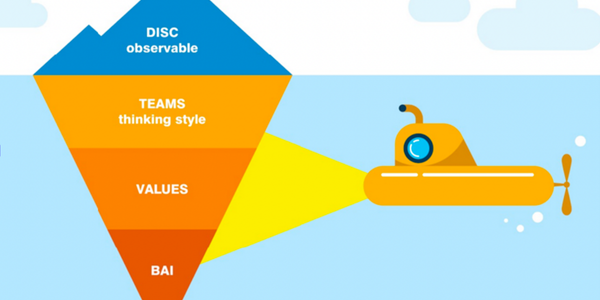
At the 2024 PrimeGlobal Technical Forum in Vienna, inspiration came from a lecture by experienced psychologist Barend Blondé, who highlighted the importance of understanding the personalities of the people you work with. This led to a search for a tool to help identify employees' personality types, ultimately leading to the discovery of DISC. DISC is considered a foundational tool for assessing competencies, helping determine what supports and hinders a company’s development.
This is how, at Szwak and Spółka, the structure of the company was created based on personality identification.
After conducting the DISC assessment with all employees, the organization identified the personality types within the team: Dominant, Influencing, Steady, and Compliant. This knowledge provided a better understanding of each person’s behaviors, reactions, problem perceptions, and approaches to solving challenges.
With this insight, the natural strengths and motivations of each team member became clearer. It also allowed the organization to identify individuals with natural leadership potential. In turn, leaders were able to delegate tasks more effectively, matching responsibilities to each team member’s talents and areas for development.
Content by:
Epta Advisors Sp. z o.o.
Epta Advisors (ex Szwak&Społka) is a Polish firm based in Poznań, which provides a comprehensive package of specialized accounting and tax services with a dose of electronic tools. Our clients range from small, one-man businesses to large, dynamically developing joint-stock companies. We cooperate with independent law, tax, and audit companies, and software suppliers.
Learn more