From Disruption to Opportunity: Taking the Pulse of AI in Accounting
Technology
July 18, 2025At the recent PrimeGlobal Partner Leadership Summit, Pascal Finette kicked off the event with an in-depth look at how AI is reshaping accounting’s future. A veteran of Google, Mozilla, and eBay, and founder of radical, Pascal brought his trademark clarity and candor to a conversation that’s quickly evolving. The fear-driven narrative around AI is giving way to one of possibility, where firms are no longer asking if they should adopt AI, but how they can use it to unlock capacity, drive value, and reimagine their role in a changing world.
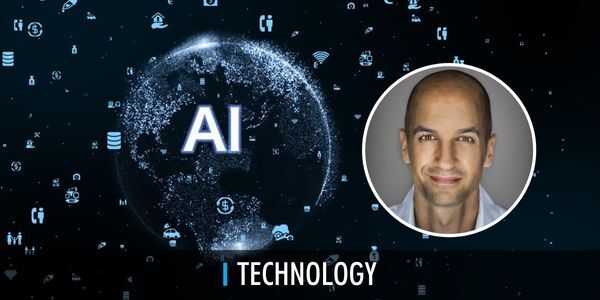
A few weeks ago, Pascal Finette addressed the PrimeGlobal Partner Leadership Summit in Charleston, South Carolina. The energy in the room was palpable, but what struck him most was the profound shift in the conversation surrounding artificial intelligence. For years, discussions about AI in the accounting profession had been tinged with a sense of disruption—a narrative dominated by the fear of threats, replacement, and uncertainty. Today, that narrative is being rewritten. The pulse has quickened, and the rhythm has changed from one of apprehension to one of tangible business opportunity.
The question is no longer if firms should adopt AI, but how they can leverage it for a competitive advantage. The focus has moved beyond the well-worn fear of “Will AI take my job?” to a more strategic and optimistic inquiry. As one of the firm leaders interviewed for CPA.com’s 2025 AI in Accounting Trends Report aptly put it, 'The question isn’t ‘will AI take my job?’, it’s ‘how many new clients can I serve once a third of the work is gone?’” This sentiment captures the new mindset perfectly. Firms are beginning to see AI not as a replacement for human talent, but as an amplifier of it; AI as a tool to unlock capacity, drive efficiency, and create space for higher-value work.
This shift isn’t just theoretical; it’s happening in practice. As detailed in the report, the ground is moving fastest in areas that were once the bedrock of manual effort. Bookkeeping and tax preparation are undergoing a rapid transformation. Agentic AI platforms from various software vendors are no longer just assisting with tasks but are executing entire workflows, from transaction coding to preparing returns. This isn’t some far-out future scenario; it’s becoming rapidly the new operational reality for forward-thinking firms. Some firms are already reporting time savings of up to 70% on manual tasks, allowing them to reallocate their most valuable resource—their people—away from compliance and toward strategic advisory services.
The true opportunity lies in this reallocation. As AI handles more of the “how,” professionals are freed to focus on the “why.” The next frontier for firms is to leverage AI-driven forecasting, budgeting, and modeling tools to deepen client conversations. Imagine blending the intuitive wisdom of a seasoned CPA with AI-generated “what-if” scenarios to guide a client’s strategic decisions. This is where the profession’s future lies: in becoming indispensable advisors, armed with insights generated by intelligent systems. The winning firm of the future, as one software CEO noted in conversation, “is a blend of human experts and AI agents working in partnership, neither one replaces the other.”
Of course, this journey requires more than just a technology budget. It demands a strategic commitment to change management and talent development. The traditional career ladder is being reshaped, with entry-level roles diminishing and the need for AI-fluent, critical thinkers growing. Firms must now ask themselves a crucial question: “Are you training people to work with AI or to be replaced by those who do?” The skills gap isn’t about learning to code; it’s about fostering a mindset of collaboration, skepticism, and strategic application of these powerful new tools.
The conversations in Charleston confirmed that the profession is at an inflection point. The early adopters are moving beyond isolated pilots and are beginning to architect their services, systems, and talent models around what AI makes possible. The disruption is real, but the opportunities are greater. The firms that thrive will not be the ones who simply use AI to do the old things a bit faster, but those who use it to reimagine what it means to be an accounting firm in the first place. The pulse is strong, and it’s beating toward a future of augmentation, opportunity, and unprecedented value.